


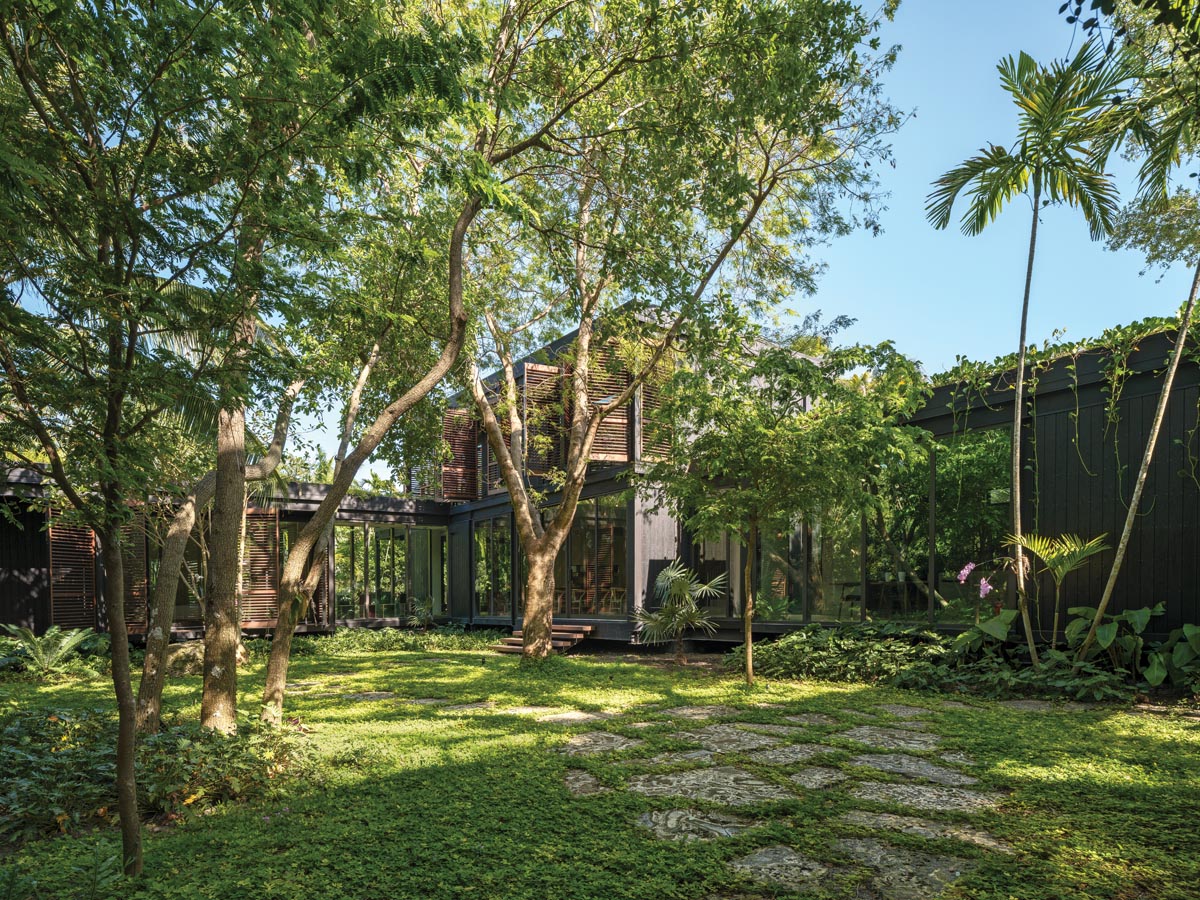

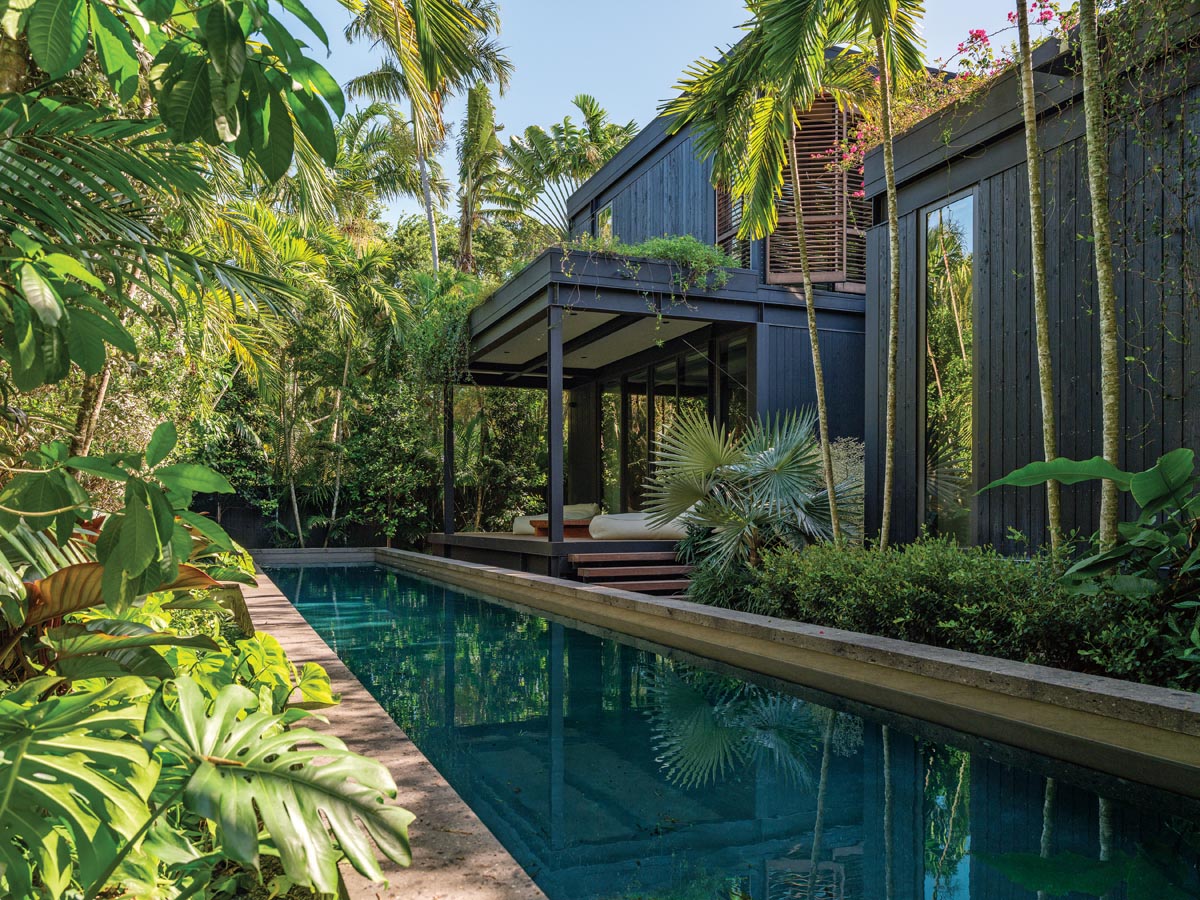

Not far from Miami’s busy Design District, the tree-filled enclave of Morningside feels light years away. Even more so as you approach a striking contemporary residence tucked within a verdant jungle-like setting thoughtfully preserved within the historic neighborhood. Conceived as a series of floating architectural volumes connected by glass passageways and open-air bridges, the dwelling, designed by local architect Jacob Brillhart, positions around a generous central garden enveloped by an indigenous hardwood hammock. A collaborative effort between Brillhart Architecture and landscape architect Christopher Cawley, the property responds to the existing landscape rather than imposing on it, preserving a 100-year-old native slash pine and protecting a mature canopy of live oaks, mahoganies, and a mix of smaller native fruit trees.
Founder of the award-winning firm Christopher Cawley Landscape Architecture, Cawley and his principal partner, Lucia Mora, are known for crafting landscapes that are timeless, transformative, and authentically rooted in their environment. Guided by a refined design sensibility and a deep respect for place, their every mission strives to blur the traditional boundaries between architecture and nature.
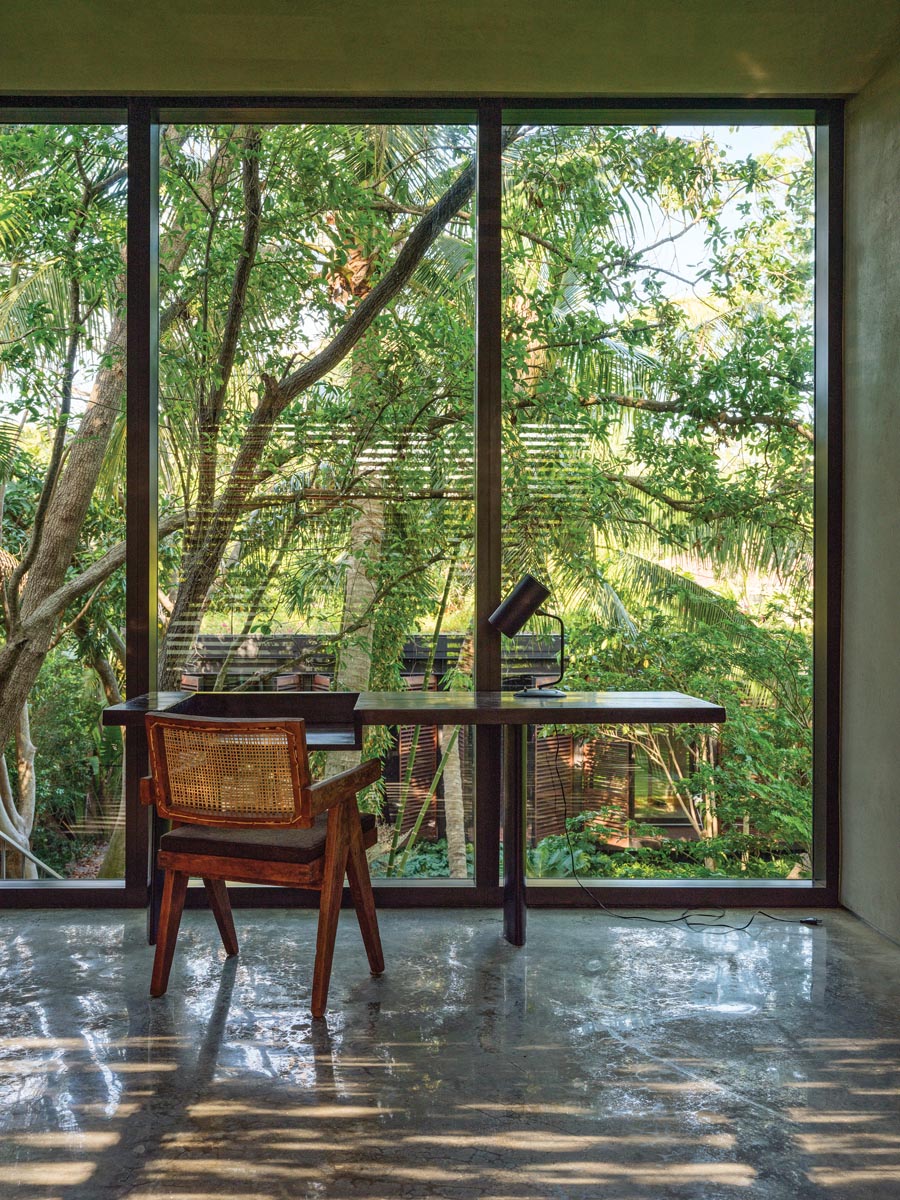
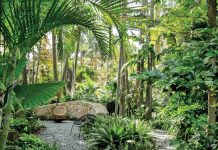
The planting design for this parcel of land exemplifies CCLA’s narrative of respect and refinement. “What began six years ago as a wild garden has since been transformed into a 4,100-square-foot home that breathes with the landscape,” says Cawley. “Lush layers of tropical and native understory species accentuate the architecture, framing curated views from every interior space and reinforcing the home’s deep connection to its surroundings.”
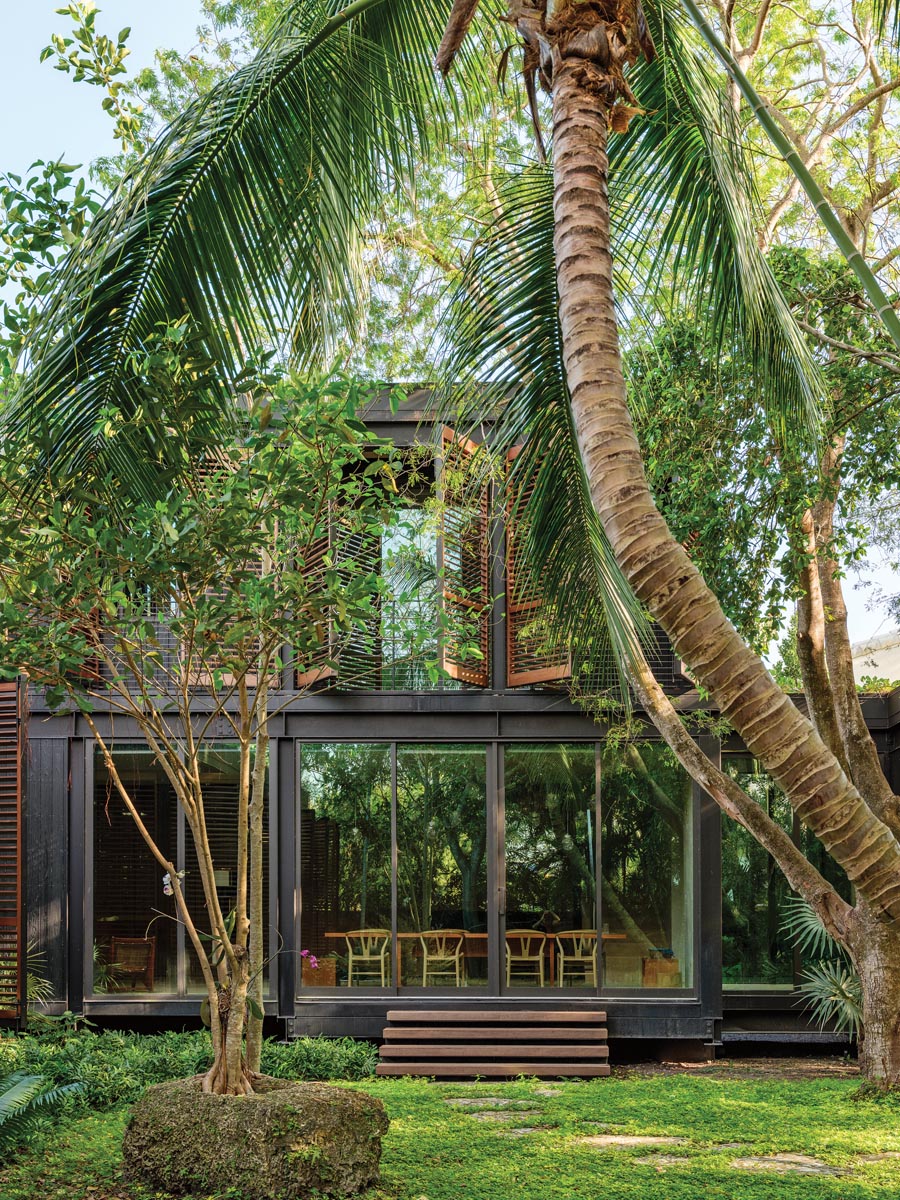
Situated on a 15,000-square-foot lot distinguished by a mature tree canopy that includes a specimen Dade County Pine and several large oaks, the site features more than 200 trees, 600 saplings, and hundreds of plantings, including flowering plants, oak trees, and fruit trees, all of which are native to the region. “Rather than imposing architecture onto the land, the design responds to it,” Cawley notes. “The result is a distinctive courtyard complex on the eastern side of the property, composed of four floating buildings connected by bridges and passageways. This fractured approach allowed us to preserve most of the specimen trees while ensuring framed views from every interior space.”
A steel structural system with narrow spread footings and cantilevered exterior walls safeguards delicate root zones, allowing the architecture to achieve its defining sense of lightness and lift—virtually floating within the landscape. Fundamentally tropical by design and deeply influenced by the tropical modernist concepts of Paul Rudolph and the Sarasota School of Architecture, the project reflects the design team’s unwavering commitment to ecological stewardship. “It champions the idea that resilient, enduring architecture must not only listen to the land but live in harmony with it,” Cawley adds. “The result is a residence where structure, landscape, and nature converge, an immersive retreat that feels both contemporary and timelessly rooted in Miami’s history and native ecology.”
Story Credits:
Text by Jeanne de Lathouder
Photography by Michael Stavaridis





Facebook Comments